


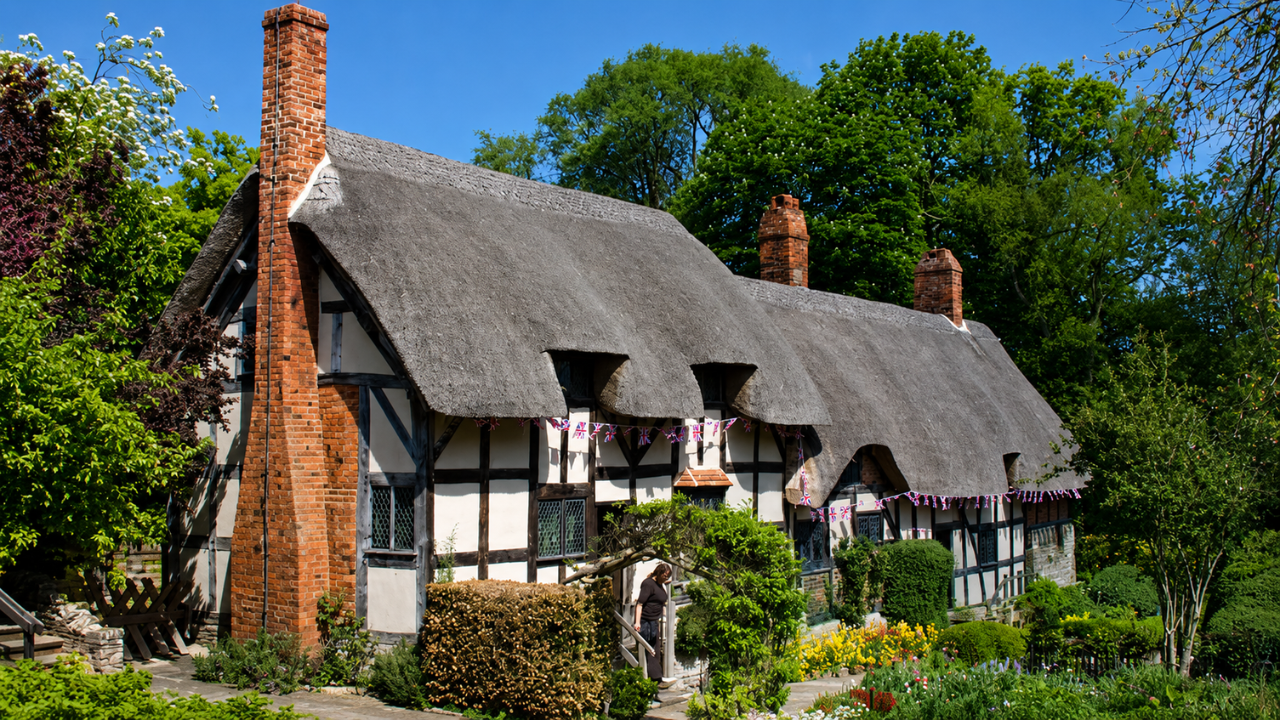
Hamnet is a historical drama film directed by Chloé Zhao and based on Maggie O’Farrell’s award-winning novel of the same name. The story explores the relationship between Agnes and William Shakespeare and the devastating loss of their young son, Hamnet. To create a believable version of 16th-century England, the production combined authentic historic buildings, rural landscapes and purpose-built studio sets. Jessie Buckley and Paul Mescal lead the cast as Agnes and William, bringing the emotional story to life against carefully selected British locations.
For audiences wondering where was hamnet filmed, the production travelled across several parts of England and used locations in Herefordshire, Gloucestershire, London and Hertfordshire. The village of Weobley was particularly important because it was transformed into a Tudor version of Stratford-upon-Avon. Cwmmau Farmhouse represented Agnes’s childhood home, while Lydney Park Estate provided atmospheric woodland scenes. London locations and Elstree Studios completed the production’s recreation of Shakespeare’s world.
What Is Hamnet About and Where Was It Filmed?

Hamnet is a historical drama inspired by the life of William Shakespeare, although the film focuses strongly on Agnes and her family rather than Shakespeare’s literary career. Maggie O’Farrell’s novel imagines the personal circumstances surrounding the death of Hamnet, Shakespeare’s son, and explores love, family, grief and resilience. Chloé Zhao’s film adaptation uses intimate performances and natural landscapes to create an emotional portrait of the family. The production design is therefore just as important as the performances in establishing the period setting.
The answer to where was hamnet filmed includes some of Britain’s most atmospheric historic locations. Weobley in Herefordshire became a major stand-in for Stratford-upon-Avon, while Cwmmau Farmhouse was used as Hewlands, Agnes’s childhood home. Lydney Park Estate in Gloucestershire supplied woodland scenery, and The Charterhouse in London represented important parts of Shakespeare’s London. Elstree Studios in Hertfordshire was also used to construct sets, including a recreation of the Globe Theatre.
Weobley Became Tudor Stratford-upon-Avon
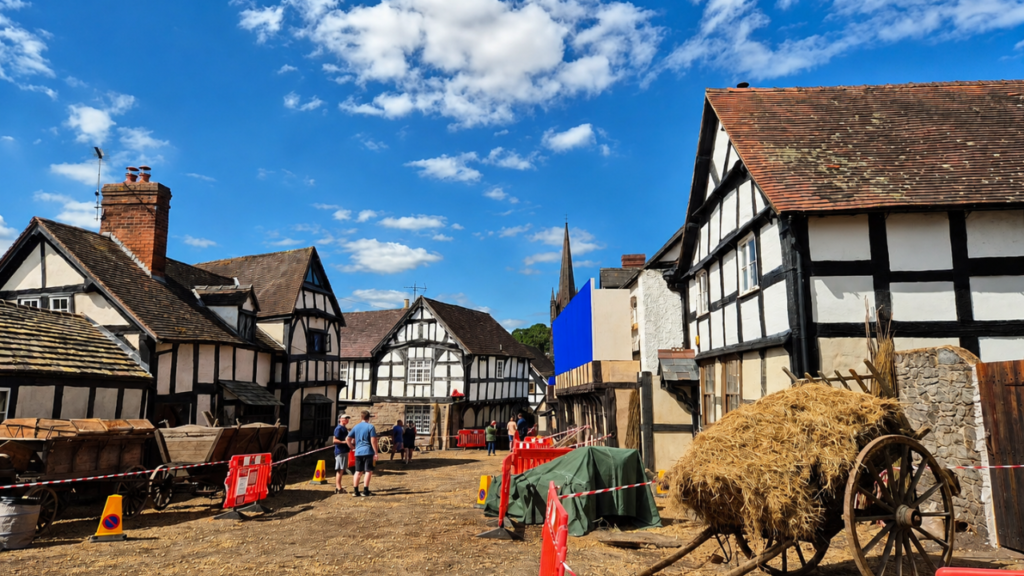
Weobley in Herefordshire is one of the most significant answers to where was hamnet filmed because the historic village was transformed into Shakespeare’s Stratford-upon-Avon. Its traditional black-and-white timber-framed buildings already possessed the appearance needed for a Tudor-period drama. The production team dressed streets and buildings to remove modern visual elements and create a convincing 16th-century environment. This allowed the filmmakers to capture authentic architecture without having to build an entire historic town from scratch.
The village’s historic character made it particularly suitable for the film’s visual style. Weobley has many timber-framed buildings, narrow streets and traditional structures that help establish the feeling of an earlier period. Production designers were able to work with the existing architecture and make selective changes for the cameras. The result was a setting that could convincingly represent Stratford-upon-Avon during Shakespeare’s lifetime.
The Church of St Peter and St Paul in Weobley also contributed to the historical atmosphere of the production. Religious buildings were central features of English villages during the period in which the story takes place. Using an authentic historic church helped the film avoid the artificial appearance that can sometimes result from modern locations dressed to look old. Weobley’s combination of architecture and surrounding countryside made it one of the production’s most visually valuable locations.
For visitors interested in Hamnet filming locations in Herefordshire, Weobley is one of the easiest places to explore. The village remains a living community with historic streets and buildings that can be viewed by visitors. Its connection with the film adds another layer of interest for fans of historical cinema. Anyone visiting should respect private properties and check local information before planning a dedicated film-location tour.
Cwmmau Farmhouse Represents Agnes’s Home
Cwmmau Farmhouse in Herefordshire was another important location in the production. The historic farmhouse was used to represent Hewlands, the childhood home of Agnes in the story. Its period architecture and rural surroundings made it an ideal choice for depicting the world in which Agnes grew up. The property helped establish the contrast between Agnes’s countryside upbringing and the different life she later experienced with William.
The farmhouse has genuine historic character rather than simply being a modern building converted for filming. Its traditional construction and surrounding farmland allowed the production team to create a convincing domestic environment. The location was carefully prepared so that modern elements would not distract from the Tudor setting. This approach helped the scenes feel connected to the landscape and period rather than looking like a contemporary property dressed for television.
Cwmmau Farmhouse is particularly interesting because it demonstrates how the production relied on real historic places. Instead of filming every interior on a soundstage, the filmmakers could use the farmhouse’s existing structure to give Agnes’s childhood home a sense of authenticity. The surrounding countryside also contributed to the naturalistic appearance of these scenes. This attention to real environments is an important feature of the film’s overall visual design.
The farmhouse is associated with the National Trust, and its connection with Hamnet has increased interest in the property among film fans. However, access arrangements can vary, so visitors should check official information before travelling. It is also important to remember that filming locations can include private or restricted areas. Cwmmau therefore works best as part of a wider exploration of the Herefordshire locations associated with the production.
Lydney Park Estate Provides the Woodland Setting
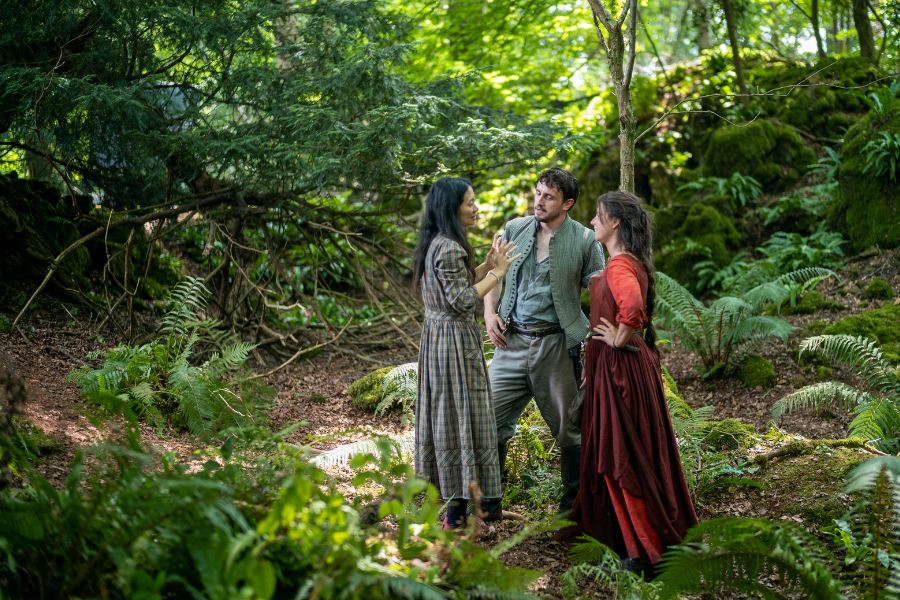
Lydney Park Estate in Gloucestershire supplied some of the film’s most atmospheric natural scenery. The estate contains extensive woodland and countryside that fit the story’s strong connection with nature. Agnes is portrayed as someone deeply connected with the natural world, making the forest environment an important part of her character. The estate’s landscape therefore served a storytelling purpose rather than simply acting as attractive background scenery.
The woodland at Lydney Park Estate helped establish the mysterious and intimate atmosphere surrounding Agnes. Its mature trees, pathways and natural surroundings offered the production a visually rich environment. Rather than relying entirely on artificial scenery, the filmmakers could use the changing textures and light of real woodland. This contributed to the naturalistic aesthetic associated with Chloé Zhao’s filmmaking.
The Forest of Dean area also provides a strong sense of rural England that fits the film’s historical setting. Although the story is connected to Shakespeare, it is equally concerned with farming, family life and the natural world. The countryside locations reinforce these themes and help move the story away from the more familiar image of Shakespeare as simply a famous playwright. The landscapes become part of the emotional world of the characters.
Lydney Park Estate is therefore worth noting for anyone researching where was hamnet filmed or planning to explore the movie’s British locations. Visitors should check the estate’s current opening dates and access conditions because not every part of a private historic estate is necessarily open throughout the year. Film fans can combine the location with other attractions in Gloucestershire and the Forest of Dean. The surrounding area offers plenty of opportunities to experience the type of countryside that helped shape the movie’s visual identity.
The Charterhouse Creates Shakespeare’s London
The Charterhouse in London provided an authentic historic environment for many of the film’s London scenes. This remarkable complex has medieval origins and contains courtyards, buildings and architectural details that helped create a convincing period atmosphere. Rather than attempting to recreate every aspect of Shakespeare’s London digitally, the filmmakers could work within a genuine historic environment. The location was particularly valuable because its architecture naturally conveys a sense of centuries-old London.
The Charterhouse helped represent the urban world William encounters away from the countryside. Its enclosed spaces and historic architecture provided a strong contrast with the open landscapes associated with Agnes. This difference between rural and urban environments supports the film’s broader exploration of family, work and separation. The location also gives the London sequences a textured and authentic appearance.
The production reportedly used much of the Charterhouse for its London material, demonstrating how versatile the historic site was. Different areas could be dressed and photographed to represent different aspects of Elizabethan London. This is one of the advantages of filming in historic complexes, where several distinct environments can exist within a relatively compact area. The production could therefore achieve visual variety without constantly moving to unrelated locations.
For people researching Hamnet filming locations in London, The Charterhouse is one of the most important places to know. It has its own historical significance independent of the film and offers visitors an opportunity to explore a remarkable part of London’s past. Access may depend on tours, events and current visitor arrangements. Checking official visitor information is recommended before making a special trip.
Elstree Studios Recreated the Globe Theatre
Elstree Studios in Hertfordshire played a different role from the historic outdoor locations. Instead of using an existing historic building, the production created purpose-built environments that could be controlled by the filmmakers. One of the most notable examples was a recreation of the original Globe Theatre associated with William Shakespeare. Building the theatre specifically for the film allowed the production designers to create an environment suited to the story and period.
The Globe seen in Hamnet should not be confused with the modern Shakespeare’s Globe on London’s South Bank. The modern attraction is a reconstruction designed to represent Shakespeare’s theatre, whereas the film’s production created its own version for cinematic purposes. A purpose-built set gave the crew greater control over lighting, camera movement, staging and the appearance of the theatre. It also allowed the design team to interpret historical research specifically for Zhao’s visual approach.
Studio filming was an important complement to the real locations. Historic properties can impose restrictions on lighting, equipment, movement and alterations, while a purpose-built set gives filmmakers much greater flexibility. Elstree Studios therefore allowed Hamnet to stage large or technically demanding sequences without compromising the visual style. The combination of studio sets and real locations helped the film maintain a consistent historical atmosphere.
The Globe recreation is one of the most interesting details for anyone asking where was hamnet filmed. It demonstrates that the production did not simply travel around Britain looking for old buildings. Instead, the filmmakers combined real heritage sites with carefully researched construction to create a complete cinematic world. This mixture of authentic locations and studio craftsmanship is a major reason the film feels visually immersive.
Hamnet Filming Locations at a Glance
The production used a mixture of villages, historic buildings, woodland and studio environments to recreate Shakespeare’s England. Each location had a specific purpose, ranging from Agnes’s childhood home to Shakespeare’s London and the Globe Theatre. This variety allowed the filmmakers to move naturally between rural family life, urban scenes and theatrical settings. It also helped create a visual distinction between different stages of the story.
Key Locations
- Weobley, Herefordshire: Used to represent Tudor Stratford-upon-Avon.
- Cwmmau Farmhouse, Herefordshire: Represented Hewlands, Agnes’s childhood home.
- Lydney Park Estate, Gloucestershire: Used for woodland and countryside scenes.
- The Charterhouse, London: Provided locations for Shakespeare’s London.
- Durham Wharf, London: Used for a riverside Thames sequence.
- Elstree Studios, Hertfordshire: Used for studio work and the Globe Theatre recreation.
These locations demonstrate how widely the production travelled across England. Herefordshire was particularly important because both Weobley and Cwmmau Farmhouse helped establish Agnes’s world and the Tudor setting. Gloucestershire added the natural landscapes, while London and Hertfordshire provided the urban and theatrical environments. Together, they created the historical world required for the film.
Quick Production Facts
- Director: Chloé Zhao
- Source novel: Hamnet by Maggie O’Farrell
- Lead actors: Jessie Buckley and Paul Mescal
- Main filming regions: Herefordshire, Gloucestershire, London and Hertfordshire
- Principal photography: 2024
- Major village location: Weobley
- Major studio location: Elstree Studios
- Notable theatre set: Globe Theatre recreation
Frequently Asked Questions
Where was Hamnet filmed?
Hamnet was filmed across Herefordshire, Gloucestershire, London and Hertfordshire, using historic locations and studio sets.
Was Hamnet filmed in Stratford-upon-Avon?
No, Weobley in Herefordshire was used to represent Tudor-era Stratford-upon-Avon.
Where was Agnes’s childhood home filmed?
Cwmmau Farmhouse in Herefordshire represented Hewlands, Agnes’s childhood home.
Where were the forest scenes in Hamnet filmed?
Many of the woodland scenes were filmed at Lydney Park Estate in Gloucestershire.
Where were the London scenes filmed?
The Charterhouse was a major London filming location, with an additional Thames-side scene filmed at Durham Wharf.
Was the Globe Theatre in Hamnet real?
The Globe shown in the film was a purpose-built recreation created at Elstree Studios rather than the modern Shakespeare’s Globe.
When was Hamnet filmed?
Principal photography for Hamnet took place during 2024, with filming reported between July and September.
Conclusion
The filming locations are a major part of what makes Hamnet visually distinctive. Historic Weobley provided the Tudor streets needed to represent Stratford-upon-Avon, while Cwmmau Farmhouse gave Agnes’s childhood home an authentic rural setting. Lydney Park Estate supplied atmospheric woodland, and The Charterhouse helped recreate the historic character of London. Elstree Studios then allowed the production to construct controlled environments, including its interpretation of the Globe Theatre.
For anyone searching where was hamnet filmed, the answer is therefore spread across several remarkable British locations rather than one single filming site. Herefordshire is particularly important, but Gloucestershire, London and Hertfordshire also played essential roles in bringing the story to the screen. The combination of genuine historic locations and purpose-built sets helped create a convincing portrait of Shakespeare’s England. For film fans, these locations also provide an interesting way to explore the historical landscapes that inspired the movie’s visual world.
For More Info So Also Visit Our Website:Domainmagazine.blog
