


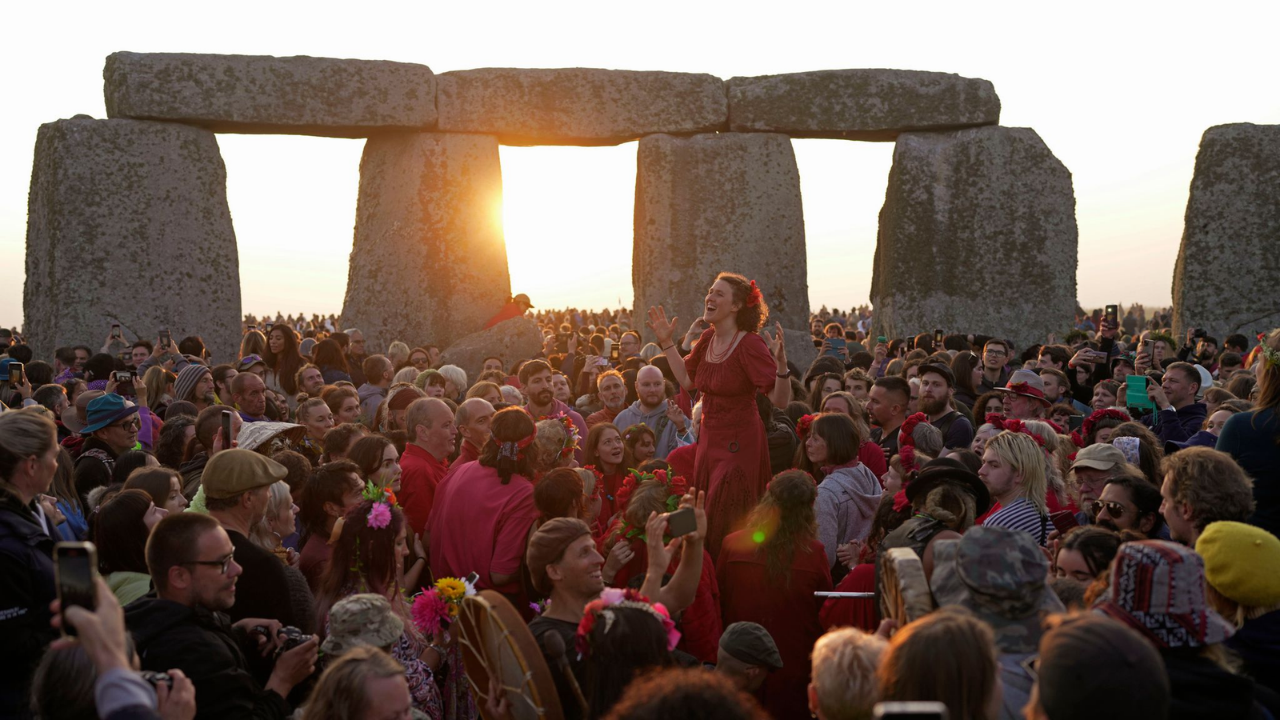
The summer solstice stonehenge experience is one of the most fascinating astronomical and cultural events connected with one of Britain’s most famous prehistoric monuments. Every year around June, Stonehenge attracts visitors who want to witness the sunrise and understand the ancient site’s connection with the changing seasons. The monument is carefully positioned so that the midsummer sunrise appears along its northeastern axis near the Heel Stone. This remarkable alignment has made Stonehenge an enduring symbol of prehistoric astronomy and ancient engineering.
The summer solstice is the longest day of the year in the Northern Hemisphere and has held importance for communities throughout history. At Stonehenge, the event combines archaeology, astronomy, landscape history and modern traditions in a unique setting. Although researchers cannot determine exactly what prehistoric people believed about the solstice, the monument clearly demonstrates an understanding of the Sun’s annual movement. Today, the event continues to attract history enthusiasts, photographers, spiritual groups and travellers from around the world.
What Is the Summer Solstice at Stonehenge?
The summer solstice occurs when the Sun reaches its northernmost position relative to Earth’s equator, producing the longest period of daylight in the Northern Hemisphere. It usually takes place around 20 or 21 June, although the exact date can vary slightly depending on the year. At Stonehenge, the solstice is particularly important because the monument’s main axis aligns with the direction of the midsummer sunrise. From the centre of the stone circle, the Sun appears to rise near the Heel Stone on the northeastern horizon.
The summer solstice stonehenge alignment is one of the most recognisable features of the monument’s design. The Heel Stone stands outside the northeastern entrance and provides an important visual marker for the midsummer sunrise. Archaeological evidence indicates that Stonehenge developed over many centuries and that its builders deliberately incorporated solar alignments into the monument. While the precise religious or ceremonial meaning remains unknown, the relationship between the stones and the Sun is an important part of Stonehenge’s archaeological significance.
Stonehenge and the Midsummer Sunrise
The relationship between Stonehenge and the midsummer sunrise is one of the main reasons the site attracts worldwide attention. When viewed from the centre of the monument, the Sun rises in the direction of the Heel Stone during the summer solstice. Early sunlight can pass through the stone setting, creating the dramatic effect that visitors associate with the solstice. This alignment demonstrates that prehistoric communities observed the seasonal movement of the Sun carefully.
The position of the sunrise changes throughout the year, moving northward toward midsummer and southward toward midwinter. Stonehenge’s builders appear to have recognised these predictable movements and incorporated them into the monument’s layout. The Avenue, an ancient ceremonial route connected with Stonehenge, also follows the general solar axis. Together, these features suggest that the movement of the Sun may have played an important role in prehistoric ceremonies and gatherings.
The Heel Stone is particularly important because it provides a clear marker on the northeastern horizon. Its position helps demonstrate the relationship between the stone circle and midsummer sunrise. Archaeologists have also identified evidence suggesting that another stone may once have stood close to it, potentially creating a more defined sunrise frame. These features make the Heel Stone an essential part of discussions about ancient astronomy at Stonehenge.
Visitors watching the sunrise today experience a landscape that has been shaped by people for thousands of years. Although the modern celebration is not a complete reconstruction of prehistoric activity, the solar alignment remains genuine and archaeologically significant. The combination of natural sunlight and ancient architecture creates a memorable atmosphere. It also helps modern visitors appreciate why the builders may have chosen this particular landscape for their monument.
History of Stonehenge and the Solstice
Stonehenge was constructed through several major stages rather than being completed at one time. The earliest major activity began around 5,000 years ago, while the central sarsen stone setting was created around 2500 BC. Earlier earthworks and burial activity show that the landscape already had ceremonial importance before the famous stone circle was established. Over time, different communities added, moved and modified features around the monument.
The builders also transported bluestones from the Preseli Hills in Wales, demonstrating the enormous effort involved in creating the monument. The large sarsen stones were arranged into uprights and horizontal lintels, forming the distinctive architecture visible today. Stonehenge was connected with other prehistoric monuments in the surrounding landscape, including avenues, burial sites and ceremonial locations. These connections show that the monument was part of a much larger cultural landscape.
The solar alignments provide important clues about the way prehistoric communities may have understood time and seasonal change. The summer solstice sunrise and winter solstice sunset occur along opposite directions of the monument’s principal axis. This arrangement may have helped mark important moments in the agricultural or ceremonial year. However, archaeologists continue to debate the exact purpose and meaning of these alignments.
The summer solstice stonehenge tradition therefore combines established archaeological evidence with modern interpretations of prehistoric life. The stones provide physical evidence of deliberate alignment, but there are no written records explaining exactly why the builders created it. Modern visitors should therefore distinguish between archaeological facts and theories about ancient rituals. This uncertainty is part of what makes Stonehenge such a fascinating historical mystery.
Summer Solstice Celebrations at Stonehenge

Modern solstice celebrations have transformed Stonehenge into an internationally recognised gathering place during midsummer. Visitors come to watch the sunrise, explore the prehistoric landscape and experience the unique atmosphere surrounding the monument. Some people participate in spiritual or ceremonial activities, while others attend simply because they are interested in archaeology and astronomy. The event can bring together people with very different backgrounds and reasons for visiting.
Special access arrangements may apply during the solstice because the event differs from an ordinary Stonehenge visit. English Heritage publishes information about opening arrangements, transport, parking and visitor requirements for each year’s celebration. Conditions can change from one year to another, so travellers should always consult official guidance before making arrangements. Large crowds also mean that public transport and advance planning can be especially important.
The atmosphere around sunrise can be very different from a normal daytime visit. Visitors may gather quietly before dawn while waiting for the Sun to appear above the horizon. When the first light reaches the monument, the alignment creates an impressive visual experience that connects the modern audience with an ancient landscape. Weather conditions can affect visibility, but even cloudy mornings can provide a memorable atmosphere.
Respect for the monument is an important part of modern celebrations. Stonehenge is a protected archaeological site, so visitors must follow event rules designed to prevent damage to the stones and surrounding landscape. Touching or climbing the stones is not permitted during the solstice event. Following official instructions helps protect the monument so that future generations can continue to experience its remarkable history.
Visiting Stonehenge for the Summer Solstice
Planning is essential for anyone hoping to experience Stonehenge during the summer solstice. The event can attract very large crowds, and temporary traffic arrangements may operate around the site. Visitors should check official information for the relevant year before travelling because access rules and transport arrangements can change. Those travelling from outside Wiltshire should also allow additional time for possible delays.
Public transport can be a practical choice because roads around Stonehenge may become busy during the event. Salisbury is an important transport hub for visitors travelling by train, and special services may operate depending on the year’s arrangements. Parking availability can also be limited, particularly during major solstice events. Checking the official visitor information before departure can help avoid unnecessary delays.
The route from the visitor centre toward the stone circle may involve walking across uneven ground. Comfortable outdoor footwear is therefore recommended, especially for visitors travelling before sunrise. A small torch can be useful during the early-morning walk, while warm layers can provide comfort because temperatures may be cool before sunrise. Visitors should also prepare for changing British weather by carrying suitable waterproof clothing.
A successful summer solstice stonehenge visit is about more than simply arriving for sunrise. Visitors can take time to understand the archaeological landscape, appreciate the monument’s design and consider the connection between the stones and the changing sky. Photography is popular, but visitors should remain considerate of others and follow restrictions concerning equipment or access. With good preparation, the solstice can become one of the most memorable ways to experience Stonehenge.
Summer Solstice Stonehenge Facts and Significance
Stonehenge’s connection with the summer solstice provides evidence of sophisticated prehistoric observation of the natural world. The builders appear to have incorporated the position of the Sun into the monument’s overall design. The Heel Stone and the Avenue are particularly relevant to discussions about the midsummer alignment. These features suggest that seasonal solar movements were likely significant to the people who used the monument.
The monument’s importance extends beyond astronomy because archaeological evidence points to ceremonies, burials, gatherings and other activities in the surrounding landscape. Stonehenge should therefore not be viewed simply as an ancient calendar. Its purpose may have involved several social, religious and ceremonial functions that changed over time. The precise combination of meanings remains uncertain because prehistoric communities left no written explanation of their intentions.
The summer solstice also demonstrates how ancient architecture can interact with the natural environment. Rather than simply placing stones randomly across the landscape, the builders created relationships between architecture, horizon positions and sunlight. This required observation, planning and considerable physical labour. The result is a monument whose astronomical connections remain visible thousands of years later.
The continuing popularity of the summer solstice stonehenge event shows how prehistoric heritage still influences modern culture. People visit for historical research, photography, spiritual interests, education and personal curiosity. Modern celebrations should not be presented as exact recreations of prehistoric ceremonies because much of the original meaning is unknown. Nevertheless, the genuine solar alignment provides a powerful connection between the ancient monument and the annual movement of the Sun.
Summer and Winter Solstice at Stonehenge
Stonehenge is associated with both major solar turning points of the year. During summer, the important event is sunrise toward the northeastern end of the monument’s axis. During winter, attention turns toward sunset in the southwest. These opposite solar positions demonstrate that the monument was designed around more than one seasonal event.
The summer solstice marks the longest day, while the winter solstice marks the shortest day in the Northern Hemisphere. For prehistoric communities, these predictable points in the solar year may have helped organise seasonal activities and ceremonies. The precise cultural meanings cannot be established with certainty, but the architectural alignments provide strong evidence that solar movement mattered. This makes Stonehenge particularly important in the study of prehistoric astronomy.
The contrast between the two solstices also highlights the sophistication of the monument’s design. The same principal axis can be understood in relation to sunrise at one extreme of the year and sunset at the other. Visitors who understand this relationship can appreciate Stonehenge as part of a wider astronomical landscape. It also explains why both solstice events continue to receive attention today.
For modern travellers, the summer event is generally more widely associated with sunrise gatherings and public celebrations. Winter solstice visitors experience a very different seasonal atmosphere, with sunset taking place much earlier. Both events provide opportunities to consider how ancient communities may have watched and interpreted the changing position of the Sun. Together, they form an important part of Stonehenge’s enduring identity.
Frequently Asked Questions
When is the summer solstice at Stonehenge?
The summer solstice usually occurs around 20 or 21 June and marks the longest day of the year.
Why is Stonehenge aligned with the summer sunrise?
Stonehenge’s main axis aligns with the midsummer sunrise, suggesting that seasonal solar movement was important to its prehistoric builders.
What is the Heel Stone?
The Heel Stone is a large sarsen stone outside the northeastern side of Stonehenge that helps mark the midsummer sunrise direction.
Can you watch the solstice sunrise at Stonehenge?
Special solstice access is generally arranged, but visitors should check the official English Heritage information for current rules.
What time does sunrise occur at Stonehenge in June?
The exact time varies by date and year, but sunrise around the summer solstice occurs very early in the morning.
Was Stonehenge built as a calendar?
Its solar alignments may have helped mark seasonal changes, but archaeologists cannot confirm that it was built solely as a calendar.
Can visitors touch the stones during the solstice?
Visitors must follow site rules and are generally prohibited from touching or climbing the ancient stones.
Conclusion
The summer solstice stonehenge experience offers a remarkable combination of prehistoric archaeology, astronomy, history and modern culture. The alignment between the monument and the midsummer sunrise provides a visible reminder of how carefully ancient communities observed the natural world. Although the exact beliefs and ceremonies of Stonehenge’s builders remain unknown, the monument’s relationship with the Sun is supported by its physical layout. This combination of evidence and mystery continues to make Stonehenge one of Britain’s most fascinating prehistoric sites.
For anyone planning a visit, preparation is especially important during the solstice period because crowds, transport arrangements and access conditions can differ from normal days. Checking official information, wearing suitable footwear and respecting the protected archaeological site can make the experience more enjoyable. Whether you attend the sunrise in person or explore the history from home, the summer solstice reveals an extraordinary connection between an ancient monument and the changing movement of the Sun.
For More Info So Also Visit Our Website:Domainmagazine.blog
