


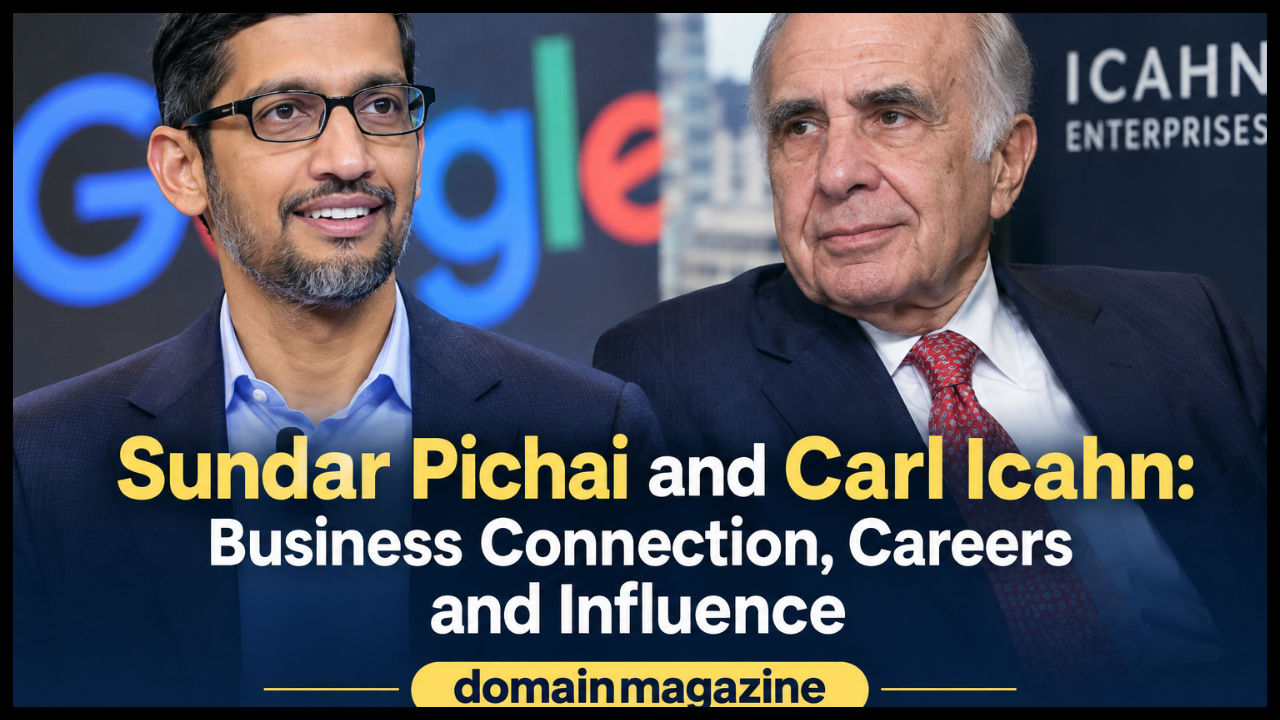
Sundar Pichai and Carl Icahn are two influential figures who have made their mark in very different areas of the business world. Pichai is known for leading Google and Alphabet, while Icahn is recognized for his long career as an activist investor and businessman. Although their professional paths are quite different, their names can appear together when discussing major technology companies, investments, corporate strategy, and the history of Motorola Mobility.
The connection between Sundar Pichai and Carl Icahn is mainly related to the wider technology and investment landscape rather than a confirmed personal partnership. Icahn was a major shareholder in Motorola Mobility when Google announced its $12.5 billion acquisition of the company in 2011. Pichai was already a senior Google executive at that time, although he was not the executive responsible for the transaction.
Who Are Sundar Pichai and Carl Icahn?
Sundar Pichai is an Indian-American technology executive who became one of the most recognizable leaders in the global technology industry. He joined Google in 2004 and gradually moved through important product and leadership roles. His work with products such as Chrome and Android helped establish his reputation inside the company. He became Google CEO in 2015 and later took on the additional role of Alphabet CEO in 2019.
Carl Icahn is an American businessman and investor best known for activist investing. Through Icahn Enterprises and related investment activities, he has built a career around taking significant positions in companies and pushing management or boards to consider changes that he believes can increase shareholder value. His business interests have extended across investment, automotive, energy, real estate, food packaging, metals, home fashion, and pharmaceuticals.
Different Paths to Business Success
The story of Sundar Pichai and Carl Icahn shows how two people can achieve extraordinary influence through completely different professional paths. Pichai developed his career through technology, product management, engineering knowledge, and corporate leadership. His rise within Google came from helping manage products that became important parts of the company’s global ecosystem.
Icahn followed a different route. His reputation developed through finance, investing, corporate negotiations, and activist campaigns. Rather than leading technology products from inside a company, he typically sought influence through ownership stakes and shareholder pressure.
Pichai’s approach is therefore centered on long-term management and innovation. His responsibilities include guiding technology development, managing employees, setting strategic priorities, and responding to competition in areas such as search, cloud computing, and artificial intelligence.
Icahn’s approach is more closely connected with capital allocation and corporate accountability. His career has involved examining businesses, identifying what he considers undervalued opportunities, and seeking changes that could improve returns for shareholders.
Sundar Pichai’s Rise at Google
The professional rise of Sundar Pichai and Carl Icahn cannot be understood without looking at Pichai’s remarkable progression at Google. Pichai joined the company in 2004 and worked on products that eventually became central to Google’s consumer technology strategy.
One of his most important achievements was his involvement with Google Chrome. The browser became a major part of the internet experience and strengthened Google’s position across web services and digital advertising.
Pichai later became closely associated with Android, Google’s mobile operating system. His leadership responsibilities expanded as Android became one of the world’s most widely used mobile platforms.
His success with major products helped him become a trusted senior executive. In 2015, Pichai became CEO of Google, and in 2019 he also became CEO of Alphabet, placing him at the center of one of the world’s most important technology companies.
Carl Icahn’s Investment Career
The professional story of Sundar Pichai and Carl Icahn becomes more interesting when Icahn’s investment philosophy is considered. Icahn became famous for buying substantial stakes in companies and then seeking changes that he believed could unlock greater value.
His style often placed him in high-profile corporate situations. He became known for challenging management decisions, questioning corporate structures, and encouraging companies to consider strategic alternatives.
Icahn’s influence eventually extended far beyond a single industry. His business interests have included automotive companies, energy businesses, real estate, food packaging, metals, and other sectors.
Through Icahn Enterprises, his investment activities have been connected with a diversified portfolio of businesses. The company describes itself as operating across seven primary business segments, demonstrating the breadth of Icahn’s commercial interests.
The Motorola Mobility Connection
A major reason Sundar Pichai and Carl Icahn may appear in the same business discussion is Motorola Mobility. Google announced in 2011 that it would acquire Motorola Mobility for approximately $12.5 billion in cash.
Carl Icahn was a major Motorola Mobility shareholder and publicly welcomed the proposed transaction. The acquisition offered Motorola shareholders a substantial premium and attracted considerable attention in the technology and investment communities.
Pichai was a senior Google executive during this period, but it would be inaccurate to describe him as the person who negotiated or personally led the Motorola acquisition. Google’s senior leadership at the time included founders and other executives who were directly involved in major corporate decisions.
The Motorola transaction is therefore best understood as an indirect connection between Sundar Pichai and Carl Icahn. Icahn was connected through his investment in Motorola Mobility, while Pichai was connected through his senior role at Google.
Why Google Wanted Motorola Mobility
The discussion surrounding Sundar Pichai and Carl Icahn also requires an understanding of why Google pursued Motorola Mobility. One important motivation was Google’s desire to strengthen its patent position as the Android ecosystem expanded.
At the time, Android was growing rapidly, but Google faced significant intellectual property challenges in the mobile technology industry. Motorola held a large collection of patents that could provide strategic value.
The deal also gave Google direct ownership of a major smartphone manufacturer. That created opportunities in hardware, although Google later sold Motorola Mobility to Lenovo for a much smaller amount.
The transaction demonstrated how technology companies can make acquisitions for strategic reasons beyond immediate financial returns. For investors such as Icahn, however, the value of the transaction was also important because it affected the price received by Motorola shareholders.
Carl Icahn’s Role in the Motorola Deal
The connection involving Sundar Pichai and Carl Icahn becomes clearer when Icahn’s position in Motorola Mobility is examined. Icahn had accumulated a significant stake in the company and therefore had a direct financial interest in the proposed Google transaction.
When Google offered to buy Motorola Mobility, the proposed price represented a major premium over the company’s previous trading level. This created an attractive outcome for shareholders who had purchased Motorola shares at lower prices.
Icahn publicly described the proposed sale as positive for both sides. His comments reflected the perspective of a shareholder who believed the transaction provided a favorable outcome.
However, there is no strong evidence that Icahn and Pichai personally negotiated the transaction together. Their connection was through two sides of the larger corporate event.
This distinction is important because online discussions can sometimes make an indirect corporate connection sound like a personal business partnership. The available record does not establish such a partnership between the two men.
Did Pichai and Icahn Work Together?
There is no widely documented evidence showing that Sundar Pichai and Carl Icahn worked together as business partners on a major venture. Their careers developed independently, and their professional responsibilities have been very different.
Pichai’s main role has been executive leadership within Google and Alphabet. His work involves technology products, artificial intelligence, advertising, cloud services, hardware, and overall corporate strategy.
Icahn’s role has primarily involved investment and shareholder activism. His influence generally comes from financial ownership, corporate negotiations, and pressure for strategic or operational changes.
Their names can therefore be connected because their professional worlds intersected around major technology and investment events. That does not mean they had a direct working relationship.
Business Leadership Styles Compared
The careers of Sundar Pichai and Carl Icahn provide an interesting comparison of two distinct forms of business influence. Pichai leads from inside a company, while Icahn has historically sought influence from an investor’s position.
Pichai tends to operate through teams, product development, research, corporate planning, and organizational leadership. His position requires balancing technology ambitions with financial performance and regulatory responsibilities.
Icahn’s style has traditionally been more confrontational. Activist investors often challenge management when they believe a company is not reaching its potential.
Despite these differences, both approaches require strong decision-making and a deep understanding of business value. Their careers demonstrate that influence can come from either executive authority or substantial financial ownership.
Technology and Investment Influence
The story of Sundar Pichai and Carl Icahn also highlights the relationship between technology companies and financial markets. Technology businesses increasingly attract major institutional and individual investors because of their growth potential.
Pichai operates on the management side of this relationship. His decisions can affect revenue, investment levels, product direction, employee strategy, and ultimately shareholder expectations.
Icahn represents a different side of the equation. Investors like him examine whether management decisions are creating enough value and may push companies to make changes.
This interaction is an important part of modern capitalism. Executives need the freedom to pursue long-term strategies, while shareholders have legitimate interests in financial performance and corporate governance.
Pichai’s Leadership at Alphabet
The modern chapter of Sundar Pichai and Carl Icahn is especially different because Pichai now leads one of the world’s largest technology companies. Alphabet has major businesses spanning search, advertising, cloud computing, artificial intelligence, hardware, and other technologies.
Under Pichai’s leadership, artificial intelligence has become a central strategic priority. Alphabet has invested heavily in AI models, computing infrastructure, products, and research.
Pichai has also had to manage regulatory pressure and competition from other technology companies. These challenges require balancing innovation with legal, financial, and organizational considerations.
Alphabet’s investor communications show Pichai continuing to emphasize AI, advanced computing, models, agents, and other emerging technologies as major areas of future development.
Icahn’s Approach to Corporate Value
The investment philosophy associated with Sundar Pichai and Carl Icahn offers a useful contrast. Icahn has spent decades looking for companies where he believes management, corporate structure, or asset values could be improved.
His strategy has often involved acquiring meaningful ownership positions and then seeking changes. Those changes can involve management decisions, asset sales, cost reductions, corporate restructuring, or other strategic actions.
This approach has made Icahn one of the best-known activist investors in the United States. It has also made him a frequent participant in highly publicized corporate disputes.
Icahn’s career demonstrates the influence that a determined shareholder can have when that investor holds enough financial interest to attract attention from company boards and other shareholders.
The Importance of Corporate Governance
The relationship between Sundar Pichai and Carl Icahn can also be viewed through the wider subject of corporate governance. Large public companies must balance the interests of executives, boards, shareholders, employees, customers, and regulators.
Pichai operates within a governance structure that includes Alphabet’s board and shareholders. His decisions are therefore subject to oversight and financial expectations.
Icahn has historically focused heavily on governance because activist investing often involves arguing that boards or management teams should operate differently.
Good corporate governance can help companies make better decisions while maintaining accountability. It can also reduce conflicts between executives and investors.
The different positions of Pichai and Icahn show why governance remains important in major public companies, particularly when strategic decisions involve billions of dollars.
Artificial Intelligence and Modern Business
The modern technology environment makes the comparison between Sundar Pichai and Carl Icahn even more relevant. Artificial intelligence has become a major source of investment, competition, and corporate transformation.
Pichai has placed AI at the center of Google’s strategy. Alphabet is developing AI models, integrating AI into products, expanding computing infrastructure, and competing with other leading technology companies.
Icahn’s investment career is not primarily associated with building AI technology. His influence comes from evaluating businesses and investments rather than leading technical product development.
The contrast demonstrates how technology can be viewed from two perspectives. Executives focus on creating products and services, while investors focus on financial performance, valuation, risk, and shareholder returns.
Financial Success and Public Attention
Public interest in Sundar Pichai and Carl Icahn is also driven by their financial success and international reputations. Both men have become widely recognized because of the scale of the businesses and investments associated with their careers.
Pichai’s compensation is closely connected with his role as a senior executive at Alphabet. His wealth has also been influenced by equity ownership and the long-term performance of Alphabet stock.
Icahn’s wealth has historically been linked to his investment activities, ownership stakes, and business interests. His financial career has made him one of the most recognizable names in activist investing.
Their financial stories are different because executive compensation and investment wealth operate through different mechanisms. Comparing them requires understanding those differences rather than treating them as identical forms of wealth.
Public Reputation and Leadership
The public image surrounding Sundar Pichai and Carl Icahn is shaped by their contrasting personalities and professional roles. Pichai is generally associated with a calm and measured management style.
His public appearances often focus on technology, innovation, AI, Google’s products, and the company’s long-term direction. He has become an important representative of the global technology industry.
Icahn has developed a much more forceful reputation. His name has long been associated with activist campaigns, corporate negotiations, and strong opinions about management decisions.
Both styles have helped them become influential. Their careers show that leadership does not always have the same appearance or operate through the same methods.
Major Challenges Faced by Pichai
The career of Sundar Pichai and Carl Icahn also illustrates how successful business leaders face significant challenges. Pichai has had to manage Google during rapid changes in technology and consumer behavior.
Artificial intelligence has created intense competition across the technology industry. Google must protect its search business while developing new AI products and responding to competitors.
Pichai has also faced regulatory scrutiny involving Google’s market position and business practices. Managing these challenges requires careful decisions that can affect billions of dollars in revenue and investment.
At the same time, Alphabet must continue investing in ambitious technologies while maintaining financial discipline. This combination makes Pichai’s leadership role particularly demanding.
Major Challenges Faced by Icahn
The investment career associated with Sundar Pichai and Carl Icahn has also involved considerable risk. Activist investing can generate significant returns, but it can also expose investors to financial and reputational challenges.
Icahn has participated in numerous high-profile corporate situations where his recommendations were debated by management, boards, and other investors.
His investment structure and use of financial strategies have also attracted regulatory attention. In 2024, the U.S. Securities and Exchange Commission announced charges against Icahn and Icahn Enterprises concerning disclosures related to pledged securities and margin loans; the matter was settled with civil penalties.
These events demonstrate that major investors operate under substantial financial and regulatory scrutiny. Success in activist investing therefore requires more than identifying undervalued companies.
Are They Rivals or Partners?
The idea that Sundar Pichai and Carl Icahn are rivals or business partners can be misleading. There is no strong public evidence establishing a direct rivalry or formal partnership between them.
Their connection is better described as indirect and corporate. Icahn was an investor in Motorola Mobility when Google pursued its acquisition, while Pichai was a senior Google executive.
Their professional interests can overlap through the companies and markets they influence. However, overlapping business interests do not automatically create a personal relationship.
This distinction is particularly important when discussing famous business figures. Public information should separate documented corporate connections from assumptions about personal relationships.
What Their Careers Teach Business Leaders
The story of Sundar Pichai and Carl Icahn offers several lessons for people interested in business. Pichai’s career demonstrates the value of developing expertise, taking on increasing responsibility, and understanding products from both technical and commercial perspectives.
His rise also shows how leadership opportunities can develop over time. Rather than becoming a major executive immediately, Pichai built his reputation through years of work within Google.
Icahn’s career teaches a different lesson. His success demonstrates the importance of understanding financial value, corporate structures, negotiation, and shareholder rights.
Together, their careers show that business influence can be built through many different routes. Technology leadership and investment activism require different skills, but both can have a major effect on large companies.
The Lasting Business Connection
The lasting connection between Sundar Pichai and Carl Icahn is primarily a story about the intersection of technology, investment, and corporate strategy. Their names are most clearly connected through the broader history surrounding Google and Motorola Mobility.
Pichai continued his rise within Google and eventually became the leader of both Google and Alphabet. His career has since become closely associated with AI, search, cloud computing, Android, and other major technology initiatives.
Icahn continued his career as a prominent activist investor and business figure. His influence has extended across many industries rather than being limited to technology.
Their paths therefore remain separate, but the corporate events surrounding major technology companies provide a reason to examine them together.
Sundar Pichai and Carl Icahn Compared
When Sundar Pichai and Carl Icahn are compared directly, the most obvious difference is their professional position. Pichai is a corporate executive, while Icahn is an investor and businessman.
Pichai’s influence comes from his authority within Alphabet and his responsibility for guiding one of the world’s most important technology organizations.
Icahn’s influence has historically come from financial ownership and the ability to advocate for changes at companies in which he invests.
Despite these differences, both have demonstrated an ability to influence major business decisions. Their careers represent two very different paths to prominence in the modern corporate world.
Frequently Asked Questions
1. Who is Sundar Pichai?
Sundar Pichai is the CEO of Google and Alphabet and a major technology executive.
2. Who is Carl Icahn?
Carl Icahn is a prominent American investor known for activist investing and corporate campaigns.
3. What connects Sundar Pichai and Carl Icahn?
Their strongest public connection is through the wider Google and Motorola Mobility business story.
4. Did Sundar Pichai and Carl Icahn work together?
There is no strong public evidence that they worked together as formal business partners.
5. Was Carl Icahn involved with Motorola Mobility?
Yes, Icahn was a significant Motorola Mobility shareholder when Google agreed to acquire the company.
6. What is Sundar Pichai best known for?
Pichai is best known for leading Google and Alphabet and overseeing major technology and AI initiatives.
7. What is Carl Icahn best known for?
Icahn is best known for activist investing, corporate negotiations, and taking significant positions in public companies.
Conclusion
The story of Sundar Pichai and Carl Icahn is ultimately a comparison between two very different forms of business influence. Pichai built his reputation through technology, product development, executive leadership, and his rise within Google. Icahn built his reputation through investment, ownership, corporate strategy, and shareholder activism. Their careers rarely overlap directly, but major corporate events such as Google’s acquisition of Motorola Mobility help explain why their names can appear together.
Understanding Sundar Pichai and Carl Icahn requires separating documented business connections from assumptions about personal relationships. Pichai continues to lead Google and Alphabet through an era shaped by artificial intelligence and rapid technological change, while Icahn remains associated with activist investing and diversified business interests. Their stories show two distinct ways of gaining influence in the corporate world and offer useful lessons about leadership, investment, strategy, and long-term business success.
For More Info So Also Visit Our Website:Domainmagazine.blog
